Most articles about how to escape the rat race talk about investments, passive income, or early retirement.
But when I was 36 years old, I realised something uncomfortable: waiting until retirement to start living felt like the wrong answer.
So instead of planning to escape later, my wife Ann and I made a decision that sounded completely unreasonable.
We built a sailing yacht and sailed away.
This is the honest story of how we escaped the rat race and what that decision actually looked like in real life.
This article is part of our Escape the Rat Race Blog, where we share the real story behind leaving the 9-to-5 lifestyle.
Step 1: When the “Sensible Life” Stops Making Sense
The Question That Changed Everything
In the mid-1990s, my life looked perfectly normal from the outside.
I worked as a Quality Engineer, and my wife Ann was a school teacher. We had steady jobs, a predictable routine, and what most people would call a sensible life.
Then one lunchtime, a colleague asked me a simple question:
“If money and responsibilities weren’t an issue, what would you really like to do?”
I didn’t hesitate.
“I’d love to drift around somewhere warm,” I said. “No stress. Just sunshine and freedom.”
He smiled and reached into his bag.
“Read this,” he said, handing me a book titled Voyaging on a Small Income by Annie Hill.
That weekend I started reading it.
And I couldn’t put it down.
Page by page, the idea began to grow in my mind: ordinary people were building small boats and sailing away to live differently.
That lunchtime conversation changed everything. I’ve told the full story of how one simple question set us on a completely different course in The Question That Changed Our Lives.
Suddenly, the life we were living felt… optional.
Sharing the “Mad Idea”
When Ann came home from a school trip, I couldn’t contain myself.
“I’ve got an idea,” I said.
“We build a yacht… sail away somewhere warm… and escape the 9-to-5.”
She looked at me as if I’d completely lost the plot.
To be fair, from her perspective, it probably sounded ridiculous.
Neither of us had ever sailed.
And building a boat? That was completely outside anything we’d ever done.
Ann asked the obvious question:
“That sounds lovely… but where would the money come from?”
It was a fair point.
The truth was, I had absolutely no idea.
But something had already shifted in my thinking.
For the first time, I could see that the so-called “sensible life” wasn’t the only option.
And sometimes that realisation is the very first step toward escaping the rat race.
Step 2: Choosing an Escape Plan
Escaping Doesn’t Always Mean Quitting Overnight
One of the biggest misconceptions about escaping the rat race is that it requires a dramatic, instant decision — handing in your notice, selling everything, and disappearing into the sunset.
In reality, for most people, it doesn’t happen like that.
It certainly didn’t for us.
Escaping the rat race usually begins with a plan, not a leap. A plan that slowly moves you from the life you have into the life you want.
For Ann and me, that plan became very clear.
If we wanted to live somewhere warm, sailing from place to place, we needed a boat.
So instead of daydreaming about freedom, we decided to build the thing that would make it possible.
Turning a Dream into a Practical Project
In 1996, we started building our yacht.
Neither of us had any real experience of boat building. In fact, when the project began, we had barely any sailing experience either.
But the idea had taken hold, and once you see an alternative life clearly enough, it becomes difficult to ignore.
The project stretched over five years, from 1996 to 2001.
During the day, we continued living our normal lives — working our jobs, paying the bills, doing all the ordinary things people do.
But evenings and weekends looked very different.
Instead of sitting in front of the television, I was in the workshop cutting and welding steel, slowly shaping sheets of metal into the hull of a yacht that would eventually carry us away from the life we knew.
Some weeks, I would spend three evenings in the workshop and feel like I had achieved almost nothing except grinding welds and cleaning steel dust.
Some weeks, it felt like nothing was happening at all.
But piece by piece, frame by frame, the boat began to take shape.
Preparing for a Different Life
Building the yacht wasn’t just about creating a boat.
It was also about preparing ourselves mentally for a completely different way of living.
Every hour spent in the workshop was a small step away from the conventional path and a step toward the life we wanted.
That’s the important thing about choosing an escape plan.
It doesn’t have to be perfect.
It just needs to move you gradually in the direction of freedom.
For us, that plan took the shape of a steel yacht being welded together in spare hours.
And with every plate of steel that went into place, the possibility of escaping the rat race started to feel a little more real.
Step 3: Leaving the Nine-to-Five Behind
The Day the Dream Became Real
For years, the idea of escaping the rat race had existed mostly in our heads, and in the slowly growing shape of a steel yacht taking form in the workshop.
But there comes a point in any long project when imagination turns into reality.
For me, that moment arrived when the boat was finally ready to launch.
I was 40 years old.
After five years of evenings, weekends, and countless hours of welding, cutting, and fitting, the yacht that had once been just an idea was now floating in the water.

Seeing her afloat for the first time was surreal.
For years, she had been a project, something measured in steel plates, tools, and long nights in the workshop.
Now she was a boat.
And more importantly, she was our way out.
The Final Step Away from Routine
Launching the boat didn’t mean we immediately sailed off into the sunset. There were still things to organise, equipment to install, and the thousand small details that come with preparing for life at sea.
But something fundamental had changed.
The plan was no longer theoretical.
It was happening.
A year later, at 41, we slipped the lines and set off toward the Mediterranean.
No more commuting.
No more office routine.
No more living for weekends and holidays.
Instead, we were steering our own course south, heading for warmer waters and a completely different way of living.
The Reality of That Moment
People sometimes imagine that leaving the nine-to-five behind must feel like pure exhilaration.
And yes, there was excitement.
But if I’m honest, there was something else too.
A quiet moment of realisation.
For years, we had been working toward this escape, planning it, building it, preparing for it.
And suddenly, the familiar life we had always known was behind us.
Ahead lay something uncertain.
But it was also something we had chosen deliberately.
That’s the real moment you escape the rat race — not when you first dream about it, but when you finally cast off the lines and commit to a different path.
Step 4: The Reality of Escaping the Rat Race
Freedom Isn’t Always Comfortable
When people imagine escaping the rat race, they often picture endless sunshine, calm seas, and a carefree life without stress.
The reality is a little more complicated.
Freedom doesn’t mean life suddenly becomes easy. It simply means you’ve chosen a different set of challenges.
And when your new life involves sailing a small yacht across open water, those challenges can arrive very quickly.
Lessons from the Bay of Biscay
One of the first real tests came as we made our way south toward the Mediterranean.
The Bay of Biscay has a reputation among sailors, and for good reason. When the weather turns, the sea can become wild and unforgiving.
Out there, the comfort of the old nine-to-five life suddenly feels very far away.
The boat heels over, the wind howls through the rigging, and waves crash across the deck. Sleep becomes scarce, and every decision matters.
In moments like that, you realise that escaping the rat race doesn’t mean escaping responsibility.
In fact, sometimes it means more responsibility, because out there you rely on your own judgement.
Life on a Small Yacht
Life aboard a small yacht also teaches you quickly how little space you really need.
Everything becomes simpler.
Your home moves with the wind and tide. Fresh water must be managed carefully. Food is stored wherever it can fit. Repairs are constant.
But alongside the challenges comes something powerful.
You wake up to the sound of water against the hull.
Your view changes with every anchorage.
Your time is no longer measured by office hours, meetings, or deadlines.
Instead, it’s shaped by weather, daylight, and the slow rhythm of travel.
Uncertainty Is Part of the Journey
There were moments when things felt uncertain.
Storms at sea.
Mechanical problems.
The occasional thought of, “What on earth have we done?”
But that uncertainty was also part of what made the experience real.
Escaping the rat race doesn’t mean replacing one perfectly secure life with another.
It means stepping into a life where you accept a little uncertainty in exchange for something far more valuable:
Freedom to live on your own terms.
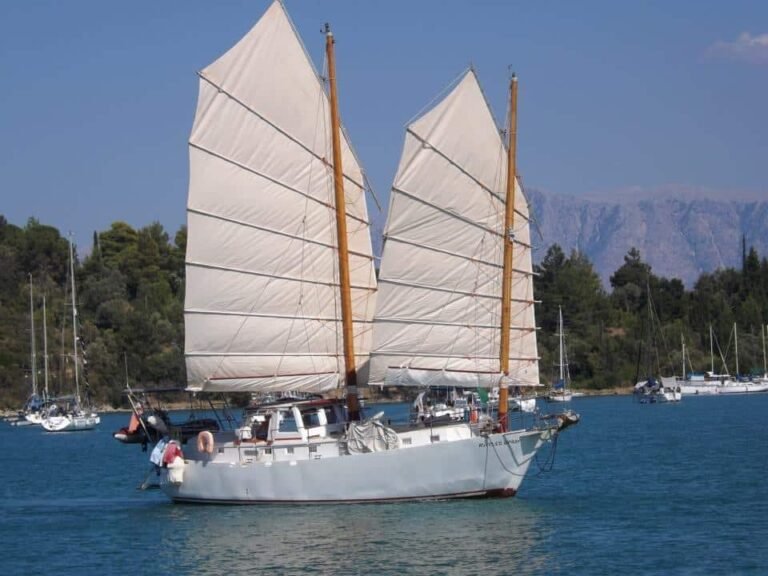
Our Boat: Ruffles Spray

Every escape plan needs a vehicle, something that makes the new life possible.
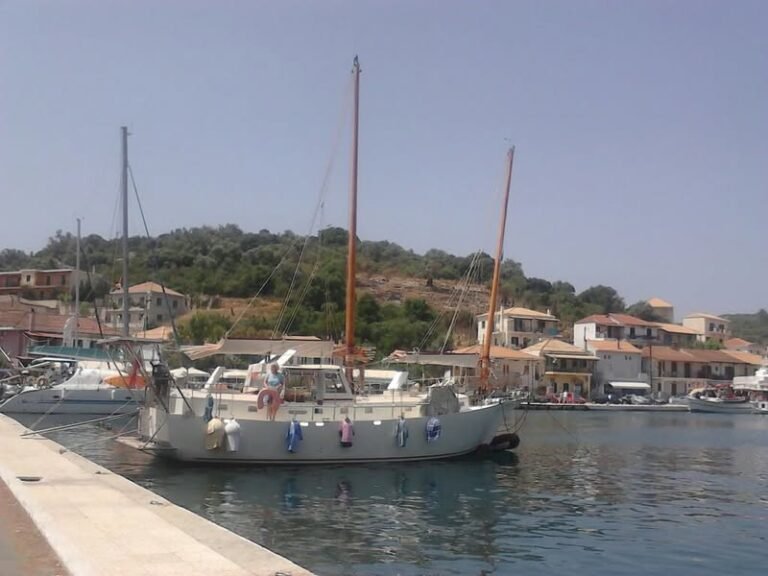
For us, that vehicle was our yacht, Ruffles Spray.
She wasn’t bought from a marina or ordered from a boatyard.
She was built by hand over five years, in spare hours after work and on weekends.
Construction began in 1996 and continued steadily until she was ready to launch in 2001. What started as sheets of steel slowly took shape as a capable ocean-going yacht — frame by frame, plate by plate.
Ruffles Spray is a steel junk-rig yacht, a type of sailing rig known for its strength, simplicity, and ease of handling. The junk rig, inspired by traditional Chinese sailing vessels, uses fully battened sails that can be raised, lowered, and reefed with relative ease — a practical choice for a small crew planning long-distance cruising.
The boat itself was designed for one purpose: long-term voyaging.
Rather than speed or luxury, the focus was on reliability, safety, and the ability to live comfortably aboard for extended periods. Every part of the boat reflected that goal — strong steel construction, simple systems, and a layout suited to life at sea.
In many ways, building Ruffles Spray was more than a boatbuilding project.
It was the bridge between two completely different lives — the conventional working life we knew, and the sailing life that eventually carried us across the Mediterranean for the next fifteen years. ⛵
Step 5: What Freedom Actually Feels Like
A Different Way to Start the Day
For most of my working life, mornings followed a familiar pattern.
The alarm clock would go off.
A quick breakfast.
Then the daily commute to work.
Like millions of people, the day was already structured before it even began.
But once we were living aboard the yacht, that routine disappeared completely.
Instead of waking to an alarm clock, we often woke to the boat at anchor’s gentle movement and the sound of water against the hull.
Sometimes the sun was already rising over a quiet bay.
Other mornings began with the clink of halyards on masts in a small harbour somewhere along the coast.
No traffic.
No rush hour.
No office waiting at the end of a commute.
Just the day ahead.
Choosing the Direction of Your Life
One of the biggest changes was something most people rarely experience in everyday working life:
choice.
When you live inside the normal nine-to-five routine, much of your time is already decided for you. Meetings, deadlines, schedules and obligations fill the calendar weeks in advance.
Life aboard a yacht works very differently.
Each day begins with a simple question:
Where do we want to go next?
Perhaps sail along the coast to the next anchorage.
Perhaps stay another day because the place feels special.
Or perhaps wait for better weather before moving on.
The pace of life becomes slower, but strangely richer.
Living by Weather, Not Meetings
Out at sea, the weather replaces the office diary.
Instead of checking meeting schedules, you check wind forecasts.
Instead of planning around business commitments, you plan around tides and weather windows.
A strong wind might mean staying at anchor another day.
A calm forecast might be the perfect opportunity to sail to the next island.
Your time is no longer controlled by other people’s agendas.
It’s shaped by the natural rhythm of the sea.
The Real Meaning of Freedom
Escaping the rat race didn’t mean every day was perfect.
There were still repairs to make, decisions to take, and the occasional difficult passage.
But the biggest difference was this:
Our time belonged to us.
We weren’t waiting for weekends or counting the years to retirement.
We were living the life we had once only talked about over lunch.
And that, more than anything else, is what freedom actually feels like.
Step 6: The Truth Most “Escape the Rat Race” Articles Ignore
It Wasn’t About Getting Rich
If you read many articles about escaping the rat race, they often focus on one thing above all else: money.
Earn more.
Invest better.
Build passive income streams.
And while money certainly plays a role in giving people choices, our escape didn’t come from suddenly becoming wealthy.
In fact, we never had large sums of money at all.
What changed our lives wasn’t a financial windfall.
It was something far simpler — we changed the structure of how we lived.
Redesigning Life Instead of Funding It
Most people assume that a life of freedom must cost a fortune.
But when you start questioning the structure of the traditional working life, you realise how many expenses are built into it.
Mortgage payments.
Daily commuting.
Running multiple cars.
Constant consumption just to relieve the stress of working.
When we moved aboard the yacht, much of that structure disappeared.
Our home was already paid for, because we had built it ourselves.
Our commute was gone.
Our lifestyle became far simpler.
We needed far less money because we had designed a life that required less money to run.
A Different Definition of Success
We didn’t escape the rat race by climbing higher in the system.
We stepped sideways out of it.
We weren’t wealthy.
We weren’t retired.
We had simply chosen a different way to live.
One where time mattered more than status.
Where experiences mattered more than possessions.
And where the structure of daily life gave us something many people quietly crave but rarely achieve:
control over our own time.
That’s the truth many “escape the rat race” articles miss.
It’s not always about earning more.
Sometimes it’s about needing less and living differently.
The Real Story of Escaping the Rat Race
The Journey That Followed
What began as a simple question over lunch slowly turned into a completely different life.
It started with an idea.
Then a plan.
Then five years of welding steel in evenings and weekends.
Eventually, it became a small yacht floating in the water, and a decision to leave the familiar world of the nine-to-five behind.
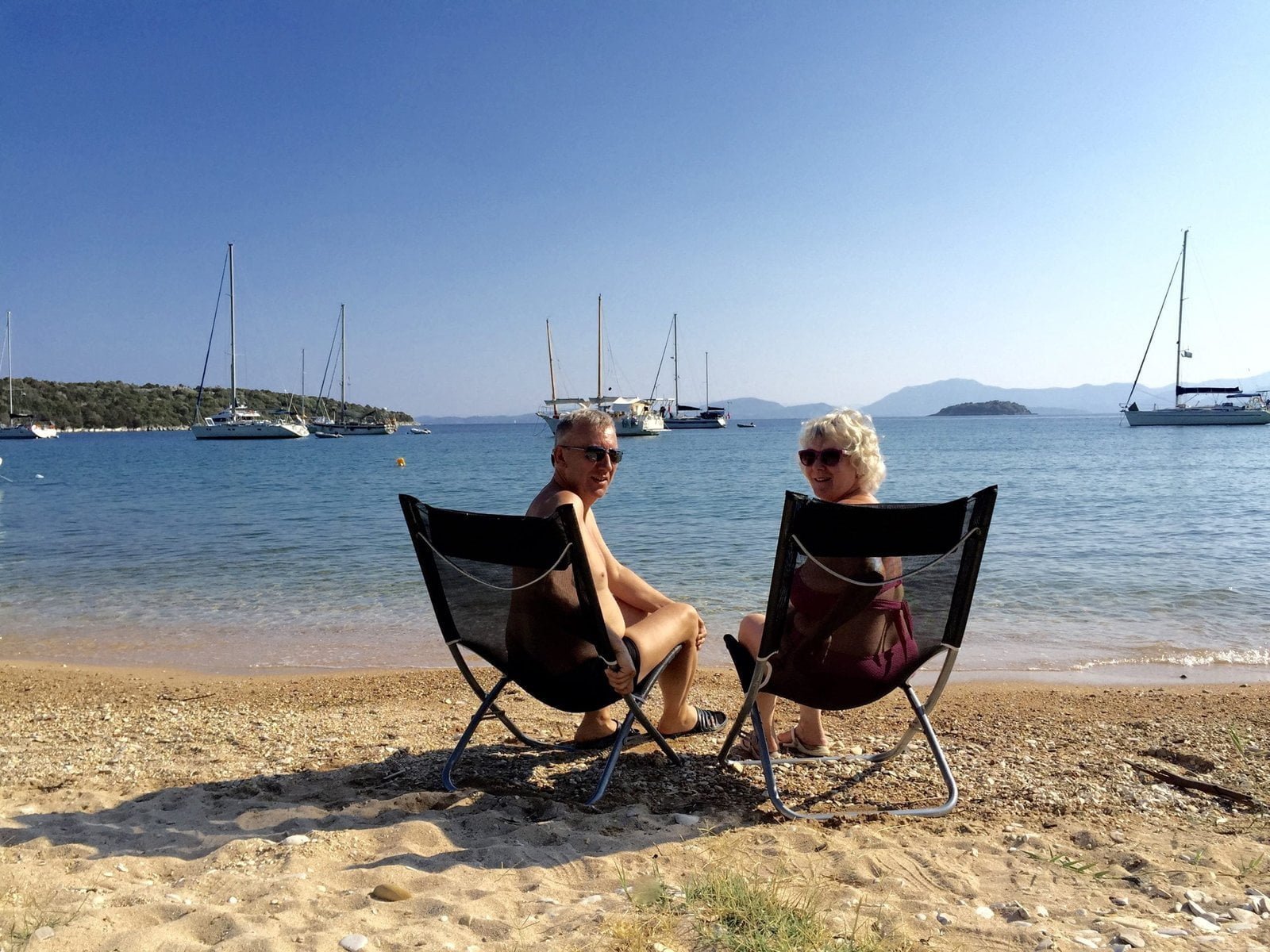
From there, Ann and I sailed south and began a journey that would take us across the Mediterranean and keep us living aboard for the next fifteen years. Along the way, we experienced the freedom, uncertainty, humour and occasional chaos that comes with choosing a very different life.
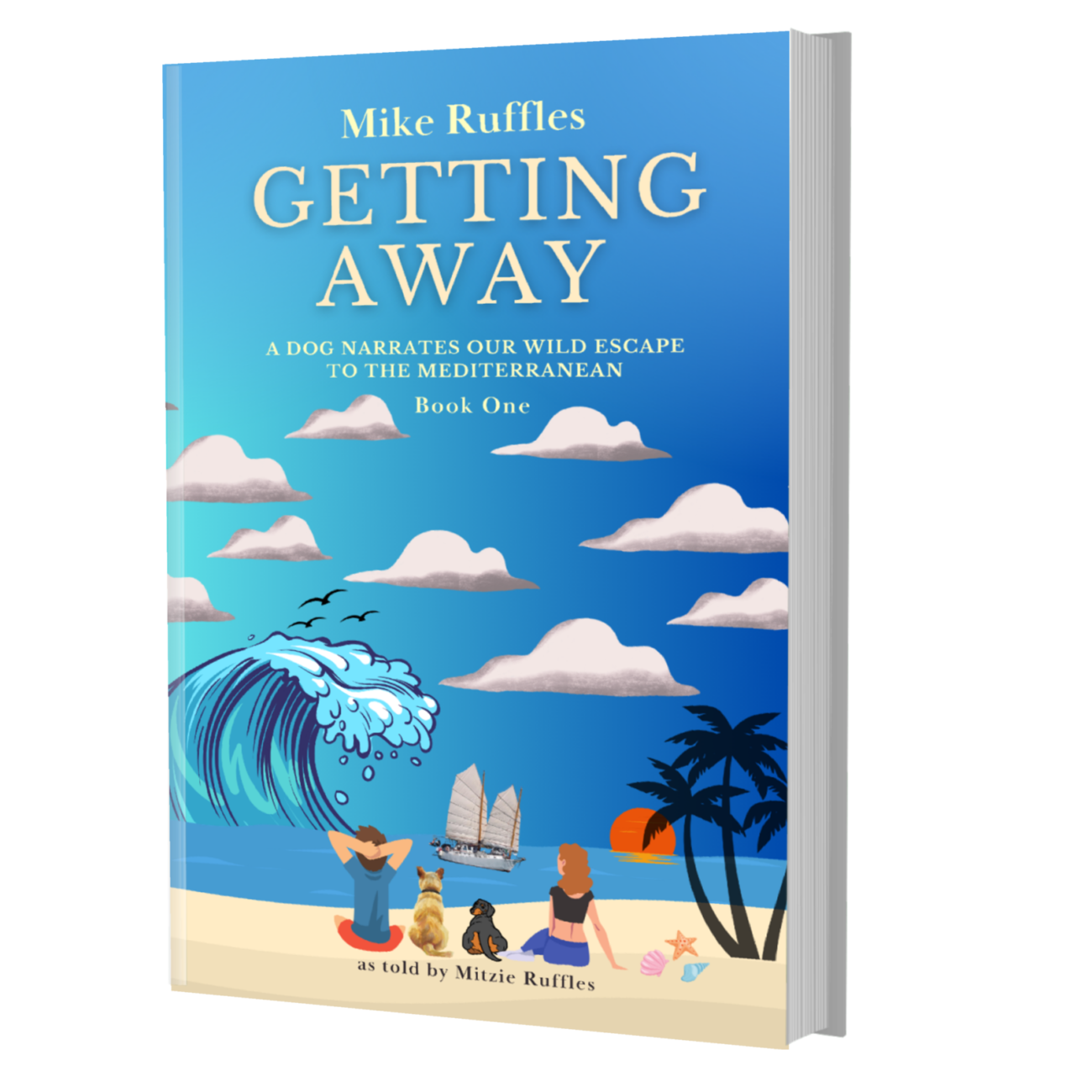
That entire story, from the first spark of the idea to the reality of crossing the Bay of Biscay and living aboard in the Mediterranean, is told in my memoir Getting Away: A Dog Narrates Our Wild Escape to the Mediterranean.
The tale is narrated by our dog Mitzie, who watched the whole adventure unfold from her unique vantage point on deck.
If you’ve ever wondered what it really takes to step away from the conventional path and try something different, you may find a piece of your own curiosity in that story.
Because escaping the rat race rarely begins with a grand plan.
More often, it starts with a simple question:
What if life could be lived differently?
👉 View the book Getting Away on Amazon
You can read more about our journey in the Escape the Rat Race Blog.